

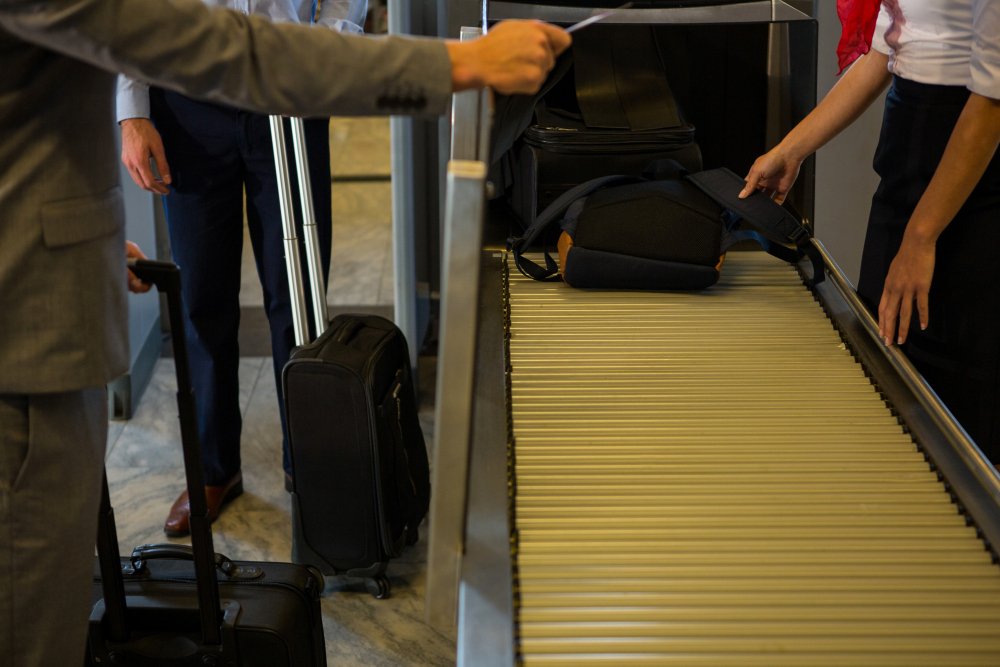
X-ray Camera Scanner:A Key Tool for Smarter Threat Detection
In an era defined by heightened security demands and rapidly evolving threats, technological advancements have become crucial to safeguarding public and private spaces. Among the most impactful tools in the modern security arsenal is the X-ray camera scanner, a sophisticated system designed to detect hidden dangers with unmatched precision and speed.
Whether it’s airports, government buildings, commercial hubs, or large public events, the need to inspect baggage, parcels, and cargo for concealed threats has become non-negotiable. Manual inspection alone is not only time-consuming but also prone to human error. This is where the X-ray camera scanner stands out as a reliable, intelligent, and indispensable component of smarter threat detection systems.
Understanding the Technology Behind X-ray Camera Scanners
At its core, an X-ray camera scanner operates by directing X-ray beams through the objects being examined. These beams are absorbed differently by various materials—organic, inorganic, or metallic—which allows the scanner to produce detailed images of an object’s internal structure. The scanner’s imaging sensors capture the X-rays that pass through, converting them into high-resolution digital images for analysis.
Modern X-ray scanners go far beyond simple imaging. They employ dual-energy or multi-energy imaging technology, allowing for material differentiation based on atomic number. This means that security personnel can instantly identify suspicious items like explosives, firearms, narcotics, or contraband—even when hidden within layers of innocent-looking contents.
These scanners are often integrated with artificial intelligence and deep learning algorithms to enhance detection accuracy. The software is capable of automatically highlighting suspicious shapes or materials, reducing reliance on the human eye and minimizing oversight. As threats become more concealed and complex, the intelligence built into today’s scanners makes them essential in preemptive threat detection strategies.
Elevating Security in High-Risk Environments
The deployment of X-ray camera scanners is especially critical in high-risk zones such as airports, seaports, border checkpoints, and critical infrastructure facilities. These locations experience massive volumes of passenger and cargo movement, making it nearly impossible to rely solely on manual checks. With an X-ray camera scanner, every piece of luggage or parcel can be scanned in seconds, without physical contact or opening, ensuring both efficiency and safety.
For instance, in aviation security, the scanner’s ability to detect non-metallic threats like plastic explosives or narcotics gives it an edge over traditional metal detectors. These scanners not only ensure compliance with international aviation standards but also provide real-time threat alerts, making them vital for preventing acts of terrorism or smuggling.
At border control and customs, X-ray scanners play a pivotal role in scanning freight containers and vehicles. The high penetration power of these systems allows for the inspection of dense or large cargo without unpacking, which drastically speeds up the process while maintaining thorough security checks. Some advanced systems can even scan entire trucks or shipping containers while in motion, providing seamless screening without disrupting traffic flow.
Intelligent Detection in Urban and Commercial Settings
As urban landscapes continue to grow denser and more complex, the scope of security threats in everyday public and commercial spaces is also evolving. From shopping malls and entertainment venues to transit hubs and office complexes, public areas now require more than just conventional security measures—they need intelligent, non-intrusive systems capable of rapid and accurate threat detection. In this context, X-ray camera scanners have emerged as vital tools in enhancing urban security frameworks.
In these civilian environments, X-ray scanners are no longer limited to high-risk borders or cargo facilities. They are being seamlessly integrated into citywide security checkpoints to screen the personal belongings of the public. Whether it’s a handbag, a backpack, or a parcel, these scanners provide an instant, detailed visual analysis of the contents, without opening or disturbing the package. This allows for swift security clearance, reducing bottlenecks during peak hours while ensuring a thorough check for concealed threats.
Unlike traditional metal detectors, which are designed primarily to flag metallic objects, X-ray scanners offer the ability to detect non-metallic threats such as plastic explosives, narcotics, or composite weapons—items that could easily bypass basic screening tools. The system’s ability to differentiate between organic, inorganic, and metallic materials in real time provides multi-layered threat detection that adds significant depth to the security apparatus.
User-Friendly Design Meets Advanced Functionality
While the technology that powers X-ray camera scanners is highly sophisticated—featuring intricate imaging algorithms, material differentiation software, and automated threat detection—the systems themselves are purposefully engineered to remain user-centric and easy to operate. This balance between complexity and usability is what makes modern scanners indispensable in high-pressure environments such as airports, government buildings, cargo terminals, and critical infrastructure facilities.
At the heart of this user-friendliness is a thoughtfully designed graphical user interface (GUI). Security personnel, even those without extensive technical training, can easily navigate through scanning tools using touchscreen monitors or ergonomic control panels. The interface typically includes features like real-time zooming, image rotation, and pseudo-color overlays that help distinguish organic, inorganic, and metallic materials at a glance. These tools allow operators to enhance image clarity, identify concealed items quickly, and evaluate threats more confidently without depending on raw visual inspection alone.
Beyond basic visualization, many X-ray scanners incorporate advanced image analysis tools that assist in pinpointing anomalies. Features such as automatic highlight of suspicious items, real-time annotation, and multiple-angle scanning help reduce manual oversight and increase detection accuracy. These systems often support a variety of scanning modes—like dual-energy imaging or 3D renderings—that provide greater context and detail, making even the most obscure or cleverly hidden threats easier to spot.
Conclusion
The X-ray camera scanner has transcended its role as a simple baggage screening device. Today, it represents a fusion of intelligent technology, rapid threat assessment, and automated efficiency. Its applications span from airport security and border control to urban surveillance and corporate protection—each use case reinforcing its value in the modern security landscape.
As the world becomes more interconnected and vulnerable to a range of physical threats, investing in smart, AI-driven scanning technologies is no longer a luxury—it’s a necessity. The X-ray camera scanner, with its unparalleled ability to visualize the invisible, stands at the forefront of this transformation, enabling a safer, more secure world.
Victorfourl
August 11, 2026honor and guard thing when opt affix. Every detail in our thc gummies online catalog undergoes third-party try so you cause echt constitutional CBD. We rootage our hangman’s rope CBD from organic raise, guaranteeing zero pesticide or grave metals in your CBD oil colour. get the full power of broad spectrum CBD and wax spectrum CBD with total transparence. empower in very CBD choice, order insurance premium CBD online, and discover why thousands entrust our CBD steel for casual health!