

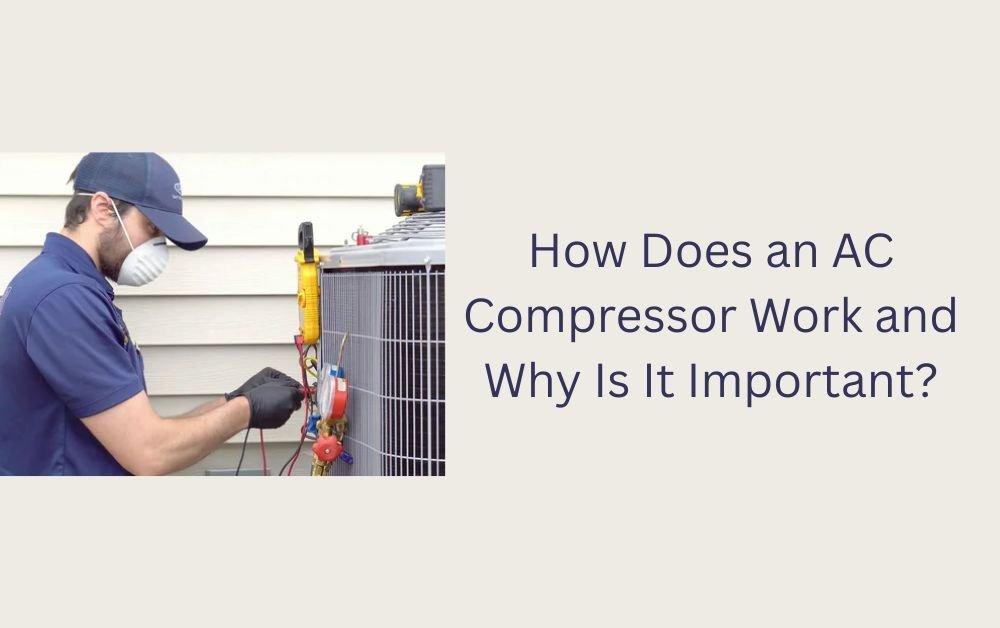
How Does an AC Compressor Work and Why Is It Important?
If you use an air conditioner at home, in the office, or even in your car, there’s one part that plays a very important role in keeping the air cool — the AC compressor. You may not see it working, but without it, your AC system simply wouldn’t be able to cool anything.
In this article, we’ll explain in simple words how an AC compressor works and why it’s so important for your air conditioning system. We’ll also talk about signs of compressor problems and how regular care can help avoid costly repairs.
Understanding the Role of the AC Compressor
What Is an AC Compressor?
The AC compressor is often called the “heart” of the air conditioning system. Just like your heart pumps blood through your body, the AC compressor pumps refrigerant (a cooling gas) through the AC system. This refrigerant is what absorbs heat from your room and carries it outside.
The compressor’s main job is to compress the refrigerant gas and send it to the condenser, where it gets cooled and turned into a liquid. This process keeps repeating, allowing your AC to blow cool air into your space.
NOTE: Is your air conditioner not cooling like it used to? Don’t wait until the problem gets worse. Our experienced technicians are ready to help with fast and affordable AC Compressor Repair services. Get your AC running smoothly again with expert care and honest pricing. Call us now or book your service online today!
How Does an AC Compressor Work?
To understand this better, let’s break it down into simple steps:
Step 1: Pulling in Warm Refrigerant Gas
The process starts with the AC compressor pulling in low-pressure, warm refrigerant gas from the evaporator coil. This gas has just absorbed heat from inside your room.
Step 2: Compressing the Gas
Next, the compressor squeezes this gas into a high-pressure, high-temperature form. This compression makes the gas ready to release the heat it collected from your home.
Step 3: Sending Gas to the Condenser
After compressing the gas, the compressor sends it to the condenser coil, usually located outside the building. Here, the gas releases its heat and turns into a cool liquid.
Step 4: The Cycle Repeats
The cool liquid refrigerant then travels back into the indoor part of your AC system, where it absorbs more heat. The cycle goes on, helping your AC cool the room continuously.
Why Is the AC Compressor So Important?
Now that we understand how it works, let’s see why this part is so essential.
It Starts the Cooling Process
Without the compressor, there would be no pressure to move the refrigerant through the system. This means your AC wouldn’t be able to start the cooling process.
It Helps Maintain Cool Airflow
The compressor helps push the refrigerant to where it’s needed — keeping the cold air blowing into your home. If the compressor fails, your AC might blow warm air or stop working entirely.
It Keeps the AC Running Smoothly
A well-working compressor ensures your air conditioning system works properly and efficiently. It helps maintain a stable temperature and prevents your system from overworking.
Different Types of AC Compressors
Not all air conditioners have the same type of compressor. Here are a few common ones:
Reciprocating Compressor
This is one of the most common types. It uses a piston and cylinder to compress the gas, just like a car engine.
Rotary Compressor
This type uses rotating blades and is known for being compact and quieter than reciprocating compressors.
Scroll Compressor
Scroll compressors are more efficient and durable. They use two spiral-shaped scrolls — one stationary and one moving — to compress the refrigerant.
Screw Compressor
Mostly used in large buildings or industrial cooling systems, screw compressors are powerful and reliable for heavy-duty usage.
Signs Your AC Compressor Might Be Failing
If your AC isn’t working properly, it could be a problem with the compressor. Here are some clear signs to look out for:
AC Blowing Warm Air
If the air from your AC feels warm or not as cool as usual, the compressor may not be working correctly.
Loud or Strange Noises
Clicking, buzzing, or grinding sounds from your AC unit could mean the compressor is having trouble.
AC Doesn’t Start
If your AC system won’t turn on at all, the compressor might have failed completely.
Tripped Circuit Breaker
A bad compressor can cause your AC to draw too much power, which may trip the breaker and shut the system down.
Vibrations or Shaking
If the outdoor unit vibrates a lot when starting, it might be struggling to start due to a faulty compressor.
What Causes Compressor Failure?
Compressors don’t just fail without a reason. Here are some common causes:
Dirty Coils
Dust and dirt on the coils make it harder for the system to release heat, putting extra pressure on the compressor.
Low Refrigerant Levels
If there’s a leak and refrigerant levels drop too low, the compressor may overheat and get damaged.
Electrical Issues
Worn wires, burned-out fuses, or power surges can harm the compressor’s electrical parts.
Lack of Maintenance
Skipping regular servicing can lead to clogged filters, dirty parts, or undetected minor issues that affect the compressor.
Too Much Refrigerant
Adding too much refrigerant during a refill can create high pressure and damage the compressor.
How to Take Care of Your AC Compressor
Good care can make your compressor last longer and help your AC work better. Here’s how:
Schedule Regular Maintenance
Have your AC system checked at least once or twice a year by a professional. They’ll clean the system, check refrigerant levels, and spot problems early.
Keep the Outdoor Unit Clean
Make sure nothing blocks airflow around the outdoor unit — like leaves, dust, or furniture. Good airflow helps the compressor release heat properly.
Change Filters Often
Clean air filters help the system work smoothly and avoid extra stress on the compressor.
Fix Problems Quickly
If you notice strange noises or poor cooling, don’t wait. Fixing small issues early can prevent compressor damage.
Repairing vs. Replacing an AC Compressor
If your compressor has failed, you may wonder whether it’s better to repair or replace it.
When to Repair
- If the compressor issue is small and fixable
- If your AC unit is fairly new
- If the cost of repair is much lower than replacement
When to Replace
- If the compressor is completely dead
- If your AC is more than 10 years old
- If the repair costs are high and may lead to more problems soon
A certified technician can inspect the system and guide you on the best option.
Final Thoughts
The AC compressor may not be the part of your air conditioner you see or think about often, but it plays a key role in keeping your space cool and comfortable. Without it, your AC simply cannot work.
Knowing how the compressor works and how to care for it can help you enjoy better air quality, cooler temperatures, and lower electricity bills. If you ever notice signs of compressor trouble, it’s best to call an expert for AC compressor repair before the problem gets worse.
Taking care of your compressor means taking care of your comfort — especially in hot places like Dubai, where a good AC system is a must.
For more insightful articles related to this topic, feel free to visit futuretechradar